In short
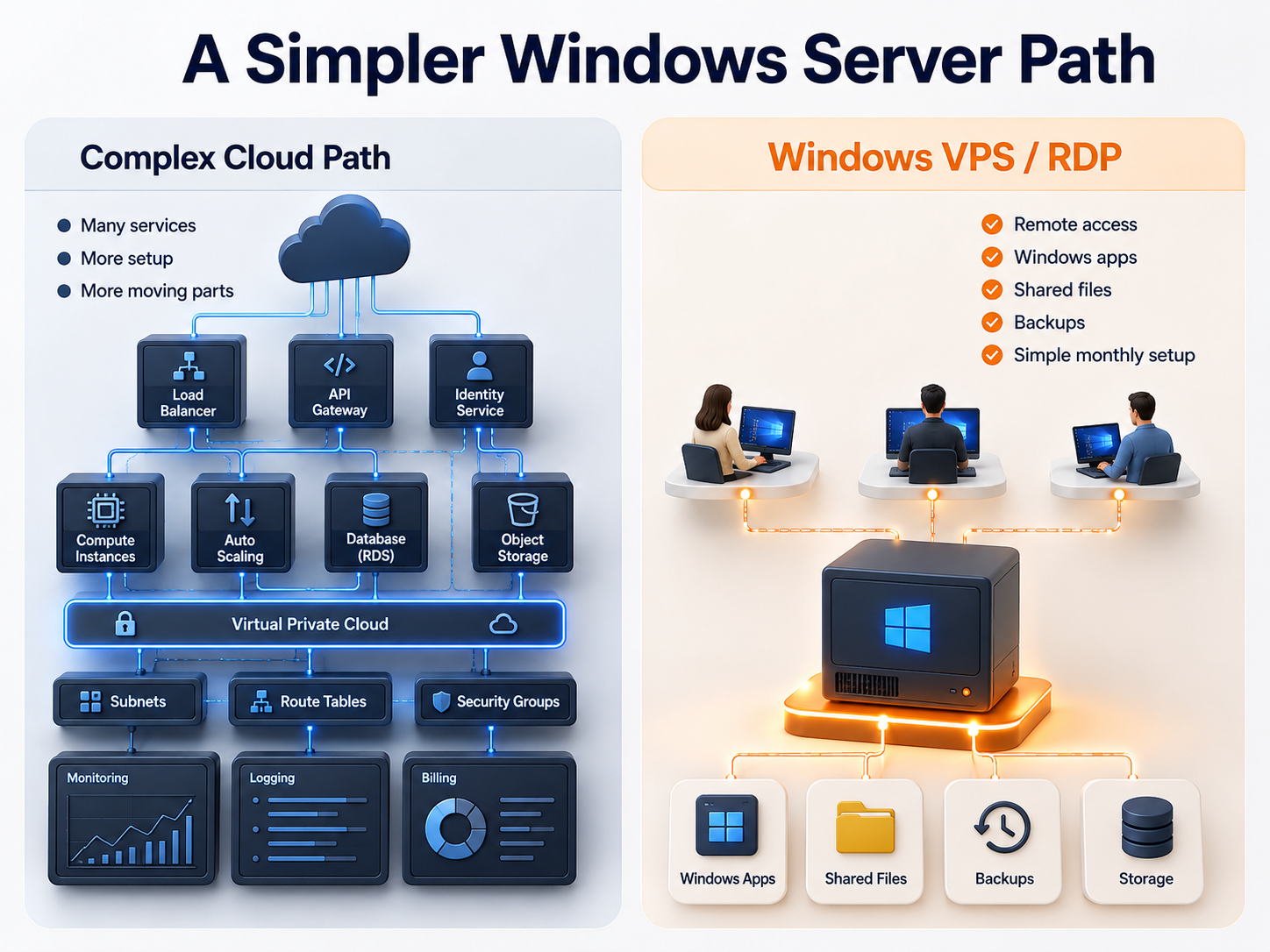
A Windows VPS can be a practical Azure Virtual Desktop alternative when a small business mainly needs a hosted Windows Server for business applications, shared files, RDP/RDS users, or an office-server replacement. It is not a like-for-like replacement for Azure Virtual Desktop.
Azure Virtual Desktop (AVD) is the stronger fit when you need a true virtual desktop platform: Windows 10/11 multi-session, pooled or personal host pools, RemoteApp publishing, managed brokering, FSLogix profiles, Azure identity/governance, autoscaling, and a larger desktop fleet. Raff Technologies Windows VM is the simpler fit when the requirement is primarily one or a few Windows Server VMs that your team or MSP can manage directly.
The decision is therefore:
Need a cloud Windows Server for apps, files, RDS, or SMB workloads?
-> Consider a Windows VPS

Need full VDI, Windows 11 multi-session, host pools, profile infrastructure, and Azure desktop management?
-> Azure Virtual Desktop is usually the better fit
Do not choose either platform from the word "desktop" alone. Start with the user workflow, application support, identity model, licensing, and operational complexity.
Azure Virtual Desktop alternative: quick decision table
| Requirement | Raff Windows VM / Windows VPS | Azure Virtual Desktop |
|---|---|---|
| One Windows Server for business applications | Strong fit | Possible, but often more platform than required |
| Small RDS Session Host environment | Strong fit when RDS is designed and licensed correctly | Also possible |
| Windows 10/11 multi-session desktop | No | Strong fit |
| Pooled host pools | No AVD-style control plane | Yes |
| Personal virtual desktops | Not an AVD-style desktop service | Yes |
| RemoteApp at scale | Windows Server RDS can provide RemoteApp | Yes, natively in AVD |
| Managed gateway/broker control plane | Customer manages the Windows/RDS architecture | Microsoft manages AVD service infrastructure |
| FSLogix profile-container architecture | Customer-managed if used with RDS | Common AVD profile model |
| Azure-native identity and governance | Limited to what you build around the VM | Strong fit |
| Simple small-business Windows server | Strong fit | Can be unnecessary complexity |
| Existing mature Azure desktop environment | Usually not a reason to migrate | Strong fit |
| MSP wants simple per-client Windows VMs | Strong fit | Depends on MSP's AVD operating model |
The most useful distinction is Windows Server hosting versus desktop virtualization platform.